Why Older Pennsylvania Homes Often Have Aluminum Wiring

Many homes built during the 1960s and 1970s throughout Pennsylvania still contain aluminum electrical wiring. At the time, aluminum became a popular alternative to copper because it was more affordable and widely available. While aluminum wiring was once considered an acceptable option, homeowners and electricians later discovered that it can create long-term electrical safety concerns if not properly maintained.
For homeowners in Morrisdale, Clearfield, Philipsburg, Houtzdale, and surrounding Central Pennsylvania communities, understanding the risks associated with older aluminum wiring is important for protecting both the home and its electrical system.
At Lightning Electric, we help homeowners identify outdated wiring issues and provide professional electrical solutions designed to improve safety, reliability, and code compliance.
Why Aluminum Wiring Was Used
During the late 1960s and early 1970s, copper prices increased significantly. As a result, many builders began using aluminum wiring in residential construction.
At the time, aluminum wiring offered several advantages:
- Lower material costs
- Wider availability
- Lightweight installation
- Acceptable conductivity standards
Although aluminum wiring can still function properly under certain conditions, electricians eventually found that it behaves differently from copper and may become unsafe as homes age.
What Makes Aluminum Wiring Risky?
The main issue with aluminum wiring is that it expands and contracts more than copper when electrical current flows through it. Over time, this repeated movement can loosen electrical connections inside outlets, switches, and breaker panels.
Loose connections may lead to:
- Excessive heat buildup
- Sparking
- Electrical arcing
- Melted insulation
- Increased fire risk
Aluminum is also more vulnerable to corrosion and oxidation, which can further reduce connection quality over time.
These problems are most common at electrical connection points rather than within the wiring itself.
Signs Your Home May Have Aluminum Wiring
Many homeowners are unaware their home contains aluminum wiring until an electrician identifies it during an inspection.
Common signs include:
- Homes built between 1965 and 1975
- Flickering lights
- Warm outlets or switches
- Frequently tripped breakers
- Burning smells near outlets
- Discolored wall plates
- Crackling sounds from outlets or switches
Because these symptoms can also indicate other electrical issues, professional inspection is recommended whenever electrical warning signs appear.
Internal Link Opportunity:
[Residential Electrical Services – https://www.lightning-electricpa.com/electrical-services]
How Electricians Identify Aluminum Wiring
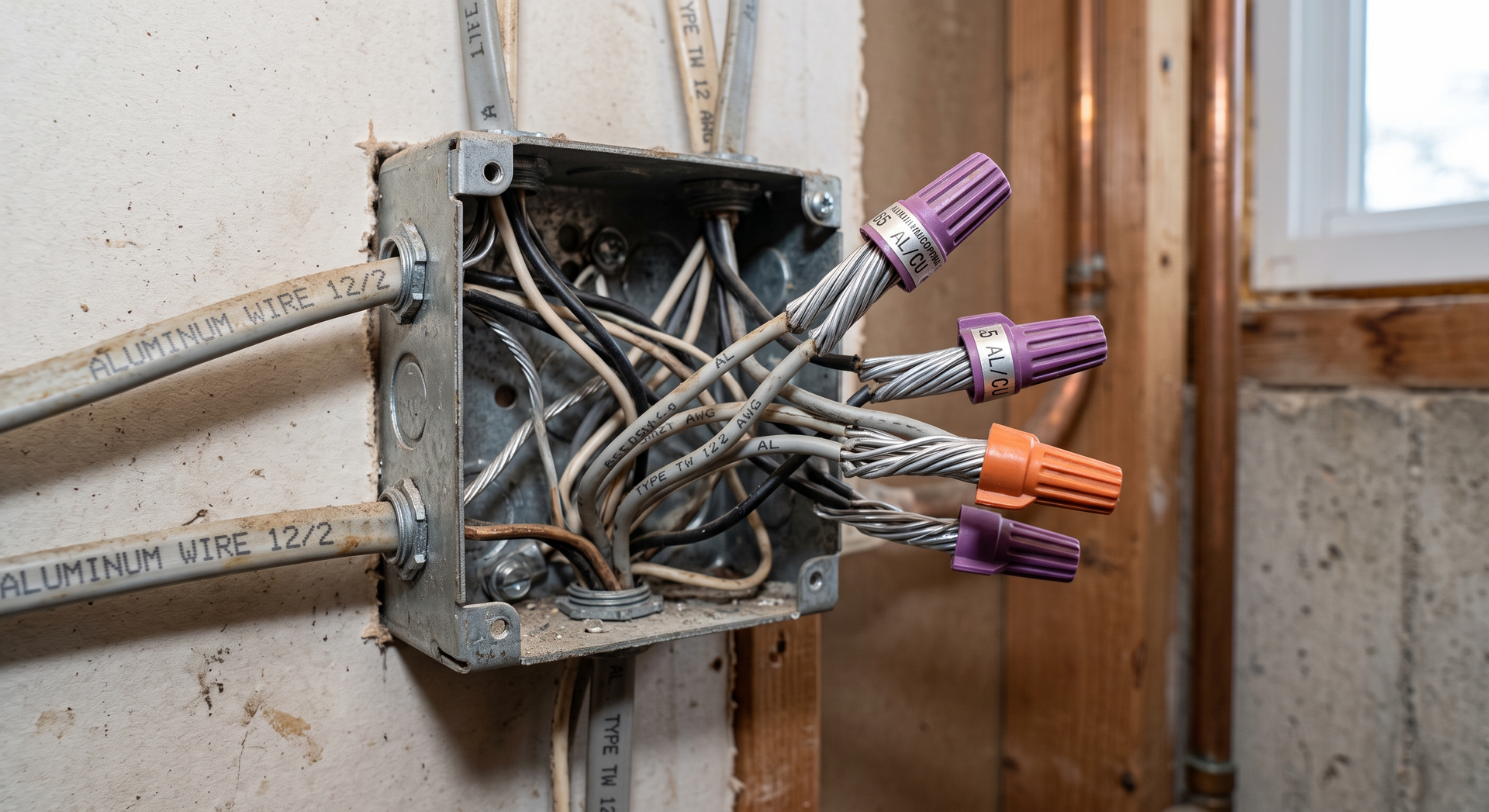
A licensed electrician can usually identify aluminum wiring by inspecting:
- Electrical panels
- Outlet connections
- Switch wiring
- Exposed wiring markings
Aluminum wiring is often labeled with markings such as:
- AL
- ALUM
- Aluminum
In many older homes throughout Central Pennsylvania, aluminum branch wiring may only be present in certain portions of the home rather than the entire electrical system.
Is Aluminum Wiring Always Dangerous?
Not necessarily. Aluminum wiring itself is not automatically unsafe, but problems often develop when connections deteriorate over time or when improper repairs have been made.
Homes with aluminum wiring may remain functional for years if:
- Connections are properly maintained
- Approved connectors are used
- Repairs are completed professionally
- The system is regularly inspected
However, outdated or poorly maintained aluminum wiring should never be ignored, especially if homeowners notice warning signs like overheating or sparking outlets.
Common Problems Caused by Aluminum Wiring
Older aluminum wiring systems may create several ongoing electrical concerns.
Loose Connections
Repeated expansion and contraction can gradually loosen wiring connections behind outlets and switches.
Overheating
Loose electrical connections generate heat, which may damage outlets, wall plates, and wiring insulation.
Electrical Arcing
Arcing occurs when electricity jumps across gaps in loose connections, creating dangerous sparks and heat buildup.
Compatibility Issues
Some outlets and switches are not rated for aluminum wiring connections, increasing the risk of poor contact and overheating.
Repair and Upgrade Options
The best solution depends on the condition of the wiring system and the home’s electrical needs.
Possible solutions may include:
- Replacing damaged outlets and switches
- Installing approved aluminum-compatible connectors
- Rewiring sections of the home
- Upgrading electrical panels
- Performing complete wiring replacement when necessary
A licensed electrician can evaluate the system and recommend the safest and most practical option.
According to the
U.S. Consumer Product Safety Commission, homes with aluminum branch wiring may have a higher risk of connection failures compared to copper wiring systems.
Why DIY Repairs Are Not Recommended
Aluminum wiring requires specific repair methods and approved materials. Improper repairs can increase electrical risks rather than solve them.
DIY repairs may lead to:
- Loose connections
- Fire hazards
- Electrical code violations
- Damaged outlets or switches
- Unsafe grounding conditions
Professional electricians understand the proper connectors, installation techniques, and safety procedures necessary when working with aluminum wiring systems.
Why Electrical Inspections Matter for Older Homes
Many older homes throughout Clearfield County and surrounding communities have electrical systems that were installed decades ago. Even if no major issues are currently visible, routine inspections can help identify hidden hazards before they become serious problems.
Electrical inspections may identify:
- Outdated wiring
- Loose electrical connections
- Overloaded circuits
- Panel capacity issues
- Improper previous repairs
Preventive maintenance can help improve both safety and long-term system reliability.
Why Homeowners Trust Lightning Electric
Homeowners throughout Morrisdale, Philipsburg, Houtzdale, Osceola Mills, Grassflat, Wallaceton, Bigler, Hawk Run, and surrounding Central Pennsylvania communities trust Lightning Electric for professional electrical services and safety inspections.
Our team provides:
- Electrical inspections
- Wiring evaluations
- Electrical upgrades
- Outlet and switch replacement
- Panel inspections
- Residential electrical troubleshooting
We help homeowners understand the condition of older electrical systems and recommend safe, code-compliant solutions.
Schedule an Electrical Inspection Today
If your home was built during the 1960s or 1970s, or if you suspect your property may contain aluminum wiring, Lightning Electric can help evaluate your electrical system safely and professionally.
Contact our team today to schedule an electrical inspection in Clearfield County or surrounding Central Pennsylvania communities.
Serving Morrisdale, Clearfield, Philipsburg, Houtzdale, Osceola Mills, Grassflat, Hawk Run, Wallaceton, Bigler, and nearby areas.